
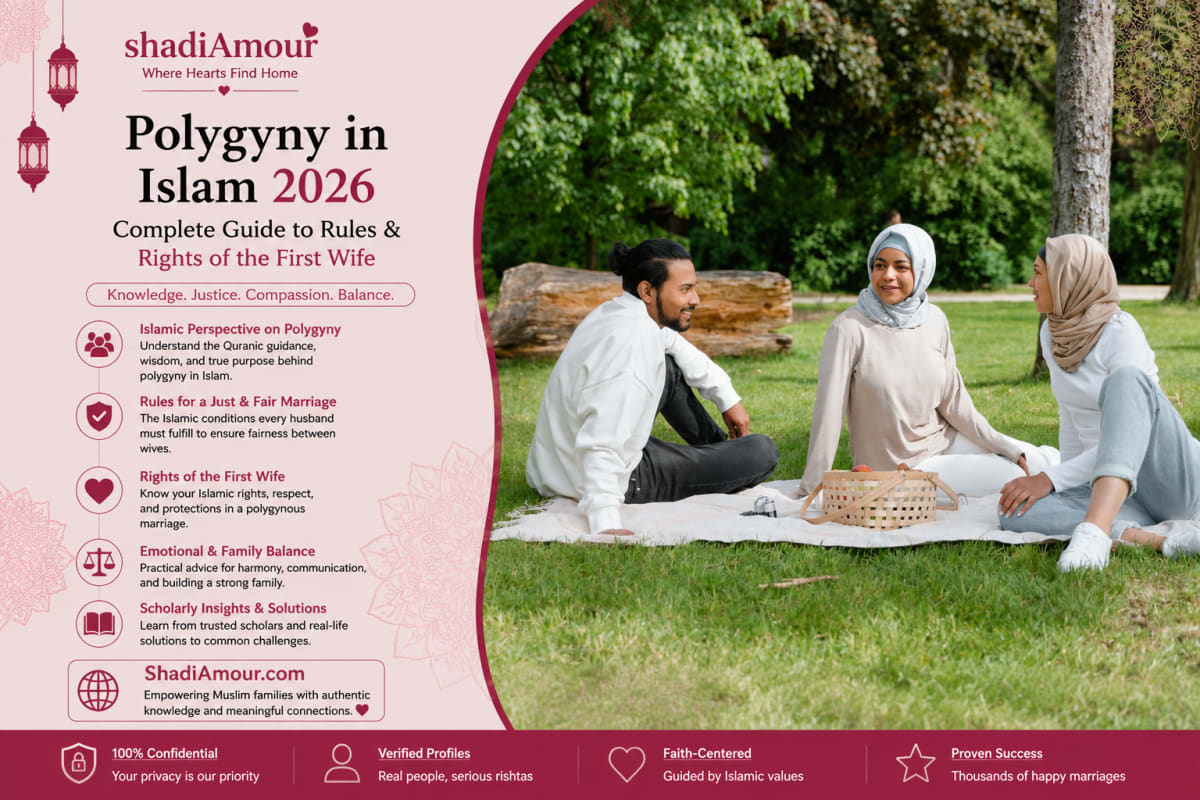
Polygyny in Islam: Rules, Rights of the First Wife and Real Family Challenges
Introduction
Few topics in Muslim marriage in 2026 create as many questions as polygyny in Islam in 2026. Many discussions are shaped by culture, emotions, or social media rather than authentic Islamic teachings. Whether someone lives in the United Kingdom, Pakistan, or elsewhere in South Asia, understanding what Allah has revealed is essential before forming an opinion. Islam treats every Nikah as a sacred trust and every halal marriage as a responsibility built on justice, mercy, and honesty. This guide explains what the Quran and authentic Sunnah teach while addressing real family concerns with balance and compassion.
What Is Polygyny in Islam?
Polygyny in Islam means one Muslim man being married to more than one wife at the same time, up to four. It is one form of polygamy and is permitted only under specific Islamic conditions, not as an unrestricted practice. Allah says:
"Marry women of your choice, two, three, or four. But if you fear that you cannot deal justly, then marry only one." (Quran 4:3)
This verse forms the foundation of the Quran on multiple wives. It came in a historical context where widows and vulnerable women needed protection after conflict. Islam regulated an existing practice by limiting the number of wives and making justice a strict condition.
When Does Islam Allow a Second Marriage?
A Muslim second marriage is allowed when a husband can fulfill the rights of every wife fairly in religion, finances, housing, and time. Permission in Islam does not mean every man should marry again. Among the Islamic rules for second marriage, justice between wives is central. A husband must provide maintenance, suitable accommodation, and equal treatment in matters within his control. Allah also says: "You will never be able to be equal between wives in feeling, even if you strive." (Quran 4:129)
Scholars explain that emotional love cannot be controlled completely, but outward actions, spending, and time must remain fair. This answers those asking when polygyny is allowed in Islam and the conditions for polygyny in Islam.
What Are the Rights of the First Wife?
The rights of the first wife in Islam remain fully protected after another marriage. Her financial support, dignity, housing, respect, time, and kind treatment cannot be reduced because of a husband's decision.
Many people wrongly believe a first wife loses her status after a second halal marriage. Islam teaches otherwise. Her marriage rights in Islam continue exactly as before. The Prophet ﷺ said,
"The best of you are those who are best to their wives." (Sunan al Tirmidhi, authentic)
The rights of the first wife after a second marriage include protection from oppression, equal financial maintenance, and respectful treatment. No wife should be criticized or neglected.
Does the First Wife Have to Give Permission?
Islamic scholars generally agree that a husband does not need his wife's permission for another marriage as a religious requirement. However, honesty, consultation, and fulfilling contractual conditions remain serious responsibilities. Some Nikah contracts include conditions limiting another marriage. Scholars discuss these clauses according to Islamic legal principles. In countries such as the United Kingdom, Pakistan, and other regions, civil or local Islamic marriage laws may also apply. Even where permission is not required religiously, deception damages trust. Open communication often helps families avoid unnecessary conflict and better reflects Islamic guidance on polygyny.
Real Family Challenges in Polygynous Marriages
Family life in polygynous marriage can involve emotional, financial, and practical challenges. Success depends less on numbers and more on justice, honesty, communication, and sincere fear of Allah. Jealousy is a natural human emotion. Even among the Mothers of the Believers, feelings existed, yet they remained examples of faith. Children may need reassurance, and financial pressure can increase if a husband lacks preparation. Regular family discussions, seeking advice from qualified scholars, and resolving disagreements respectfully strengthen the Muslim family after a second marriage. Every member deserves kindness and emotional dignity.
What Can Husbands Learn Before Considering Polygyny?
Before considering a halal second marriage, a husband should first examine whether he can truly fulfill the responsibilities Allah has placed upon him. Rights always come before personal desires. Justice between wives in Islam requires financial readiness, emotional maturity, leadership, patience, and accountability before Allah. The Prophet ﷺ warned that a man who is unfair between wives will come on the Day of Rebirth with one side leaning. (Sunan Abu Dawood, authenticated). This reminder shows that a Muslim man marrying a second wife is only part of the discussion. The greater question is whether he can fulfill every duty faithfully.
Advice for Wives and Families
Families facing questions about polygyny in Islam in 2026 benefit from authentic knowledge, respectful communication, and sincere reliance upon Allah. Decisions should never be driven by cultural pressure or social expectations. Making Istikhara, consulting trusted scholars, protecting children's well-being, and maintaining mutual respect help preserve family relationships. Husbands and wives should remember that every Islamic marriage is built upon mercy and responsibility. Seeking counseling when needed is a sign of wisdom, not weakness.
How to Join Our Largest Growing Community
Looking for a serious Muslim marriage in a supportive Islamic environment? D'amour Muslim connects practicing Muslims with genuine marriage opportunities while offering trusted guidance rooted in Islamic values.
Join Our WhatsApp Community
Become part of the largest WhatsApp Muslim marriage community serving London, Birmingham, Manchester, the United Kingdom, Pakistan, and worldwide.
Contact 07831899605 or +447831899605 to access exclusive international WhatsApp groups with verified Muslim members, daily serious marriage opportunities, and Islamic marriage guidance. The community welcomes first marriages, second marriages, divorced Muslims, widows, widowers, and families seeking halal marriage advice.
Website Sign Up
Visit https://damourmuslim.com/ to create your free account, build your Muslim marriage profile, add your marriage preferences, and connect with genuine Muslim singles and families.
D'amour Muslim is a trusted Muslim marriage website and one of the largest Muslim matrimonial platforms in 2026, serving the United Kingdom, Pakistan, India, Bangladesh, and the global Muslim community seeking faith-based marriage.
Conclusion
Polygyny in Islam is a permitted ruling surrounded by serious responsibilities, not a casual personal choice. The Quran and authentic Sunnah place justice, mercy, honesty, and accountability at the heart of every marriage. Whether considering a first or second marriage, Muslims should seek authentic Islamic knowledge, consult trusted scholars, and carefully evaluate their ability to fulfill every right. Strong families are built through faith, fairness, compassion, and sincere intentions. When these values guide decisions, every Muslim marriage has a greater opportunity to grow with peace, dignity, and the blessings of Allah.
Frequently Asked Questions
Is polygyny allowed in Islam?
Yes. Polygyny in Islam is permitted under Quran 4:3 with strict conditions of justice and responsibility. It is allowed but not compulsory.
How many wives can a Muslim man have?
A Muslim man may have up to four wives if he fulfills the conditions set by Allah. If he fears injustice, the Quran instructs him to marry only one.
Does the first wife have legal rights?
Yes. The rights of the first wife in Islam remain protected, including maintenance, housing, dignity, and fair treatment. These rights cannot be ignored after another marriage.
Can a wife include conditions in the Nikah contract?
Many scholars accept lawful conditions in a Nikah contract. Couples should discuss these matters before marriage and seek qualified Islamic advice where needed.
What happens if a husband is unfair?
Islam strongly condemns injustice. A husband who fails to fulfill his obligations is accountable before Allah and must correct any oppression toward his wives.
Is polygyny common among Muslims today?
Practices differ across the USA, Canada, Australia, the UAE, Bangladesh, India, and other communities. Most Muslim marriages remain monogamous, while polygyny exists in limited circumstances under varying legal systems.
Join Our Faith-Centered Muslim Marriage Community
Take the next step toward a blessed halal marriage by joining the largest WhatsApp Muslim marriage community and creating your free profile on D'amour Muslim. Connect with genuine Muslim singles and families across the United Kingdom, Pakistan, India, Bangladesh, and worldwide. Receive trusted Islamic marriage guidance and faith-based support and become part of a caring community that values justice, honesty, compassion, and sincere intentions.