
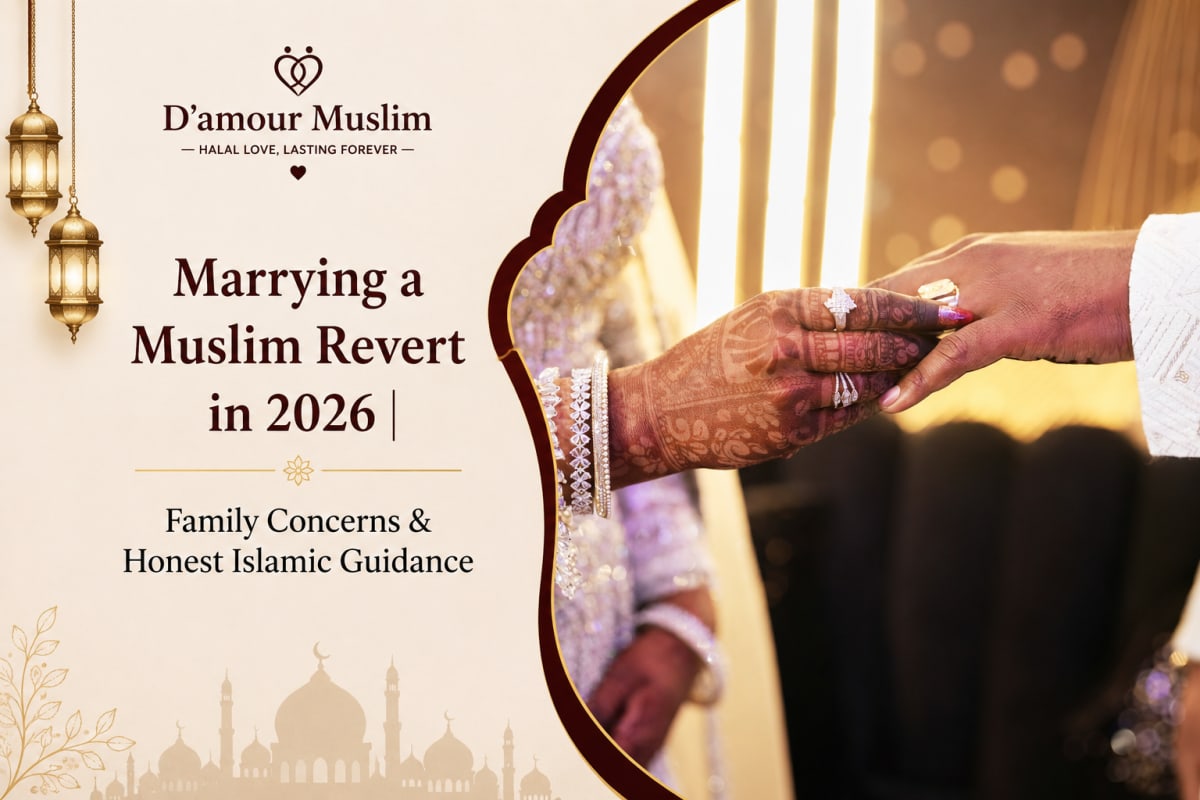
What Families Should Know about Marrying a Revert New Muslim
Introduction
A Birmingham Muslim woman tells her parents that she would like to marry a Muslim man who just converted to Islam. Her parents are glad that he converted to Islam; however, they are concerned about his family and culture, Islamic knowledge, and how their lives will go together. For all concerned, these concerns can be emotional. The family might be trying to preserve their daughter's modesty, and a Muslim might feel they are being condemned for their former life.

Islam has made certain considerations to be known when marrying a revert; it says that the families should not make any assumption but instead consider faith, character, responsibility, consent, and compatibility. The questions remain the same in 2026 and will always be valid for Muslims' marriage.
Is it allowed to marry a Revert in Islam?
You can be Muslim and not be ineligible to marry Muslims, and the previous religion/ethnicity does not make you ineligible. The families should not only take into account the birthplace of a person when considering marriage to a person who reveres to Islam but should also consider the faith, character, conduct, mutual consent, compatibility, and responsibility of both individuals. The cases may be complex, and anyone with a particular Islamic query should consult with a suitable scholar.
Does a Revert Need to Know Everything About Islam Before Marriage?
No. The new Muslim is not a person who will automatically know all of the rules, traditions, and responsibilities in Islam. Time can be taken in learning Salah, Quran, Islamic manners, rights of marriage, and responsibilities of family. Before marriage, Muslim married couples should have a sincere talk about Salah, Ramadan, Islamic family life, children, gender roles, lifestyle, and further education. An interfaith relationship with an Islamic person may be good provided both parties are interested in strengthening their faith and willing to assist their partner in strengthening the same.
What Should Families Consider Before Saying Yes?
Families need to take a holistic view of the person, rather than just the revert. There are issues of faith, character, emotional growth, financial accountability, communication, relationships in the home, marrying, and future plans to consider. A person could be a Muslim convert and not knowledgeable of Islamic knowledge but have a fantastic character and a passion to learn. Still, someone else might have been born as a Muslim and not have serious compatibility issues. Marriage decisions should be made on a basis of suitability, which is true to the candidate and not on labels.
What If Parents Disagree on Marrying a Revert?
Parents might be concerned with the varying cultures, languages, family backgrounds, religious knowledge, lifestyles, children, and social expectations. The issues are different: They must be treated with respect and addressed; it is not the same as saying no to a convert for fear of compatibility. If parents are opposed to their child marrying a convert, steer clear of family conflicts. Introduce the person slowly, give both families time to ask sensible questions, and let time pass for trust to be established. Identifying cultural differences that impact Revert Muslim marriages.
Recognizing cultural differences that affect Muslim marriages
Food, festivals, wedding practices, language, family visits, parenting, gender roles, and living arrangements are all areas that might be influenced by cultural differences. Such differences don't necessarily indicate that a marriage is bound to failure. There may be differences between the traditions of a British revert and a Pakistani Muslim family in Bradford or Leicester. Likewise, families in London, Manchester, or Birmingham may have different expectations. Not every Muslim household in South Asia is the same, and not every one is a 'revert.' The key is whether the couple is able to share these differences with each other in a respectful way and come to a mutual understanding on how they wish to construct their home.
How can a Muslim family welcome a revert?
It is possible for the first step in dealing with the revert to be treating him as a fellow member of the Muslim family. Find out about their history, but don't require them to explain it to you. Don't ask too many questions, make excessive jokes about strange customs, or try to take part in everything the family does. Gather them together in a manner that enables them to be introduced to the traditions in a respectful way, and allow the relationship to develop. For many new Muslims, acceptance by the family of their spouse can be a great sense of belonging.
Questions To Ask Before Marriage
The discussion prior to marriage should be more of a conversation than an interrogation. Muslim married couples/families can discuss faith, Salah, finances, children, work plans, housing plans, cultural expectations, Islamic education, future plans, and family boundaries. Have questions, e.g., How will the religious learning process be handled? Where's our home? What will be our budgeting procedures? What is it that we expect parents to do? How many times will we go to see the relatives? What is some of the culture that is important to each person? If you are honest, you might be able to discover both the weak and true points that can be discussed further.
Common Mistakes Families Should Avoid
There are some errors that may cause unnecessary hurts:
- Avoiding the person because they have converted to Islam
- A revert does not have any knowledge of Islam when he reverts
- Assuming the adoption of a culture overnight
- Using ethnicity as a measure of religious commitment
- Coercing a person to leave their family
- Overlooking real compatibility issues
- Haste to marry because of recent conversion to Islam
It is assumed that all the reverts are from the same background. Treatments of cultural practices as Islamic obligations. We don't want to look down on or be prejudiced against a new Muslim. The point is to make a wise marriage choice.
Practical Checklist Before Nikah
- ☐ Discuss beliefs and religious activity
☐ Talk about marriage expectations
☐ Explain children's lives and parenting - ☐ Talk about children and parenting.
☐ Discuss finances
☐ Discuss living arrangements
☐ Understand cultural differences
☐ Meet families respectfully
☐ Give time to establish trust.
☐ Make sure both persons give their consent in an open manner
☐ Take Islamic advice if necessary
Become a part of our expanding Muslim Marriage Community!
D'amour Muslim is for all those who want to find a serious marriage partner, whether they are reverts or Muslims born to Muslim parents. We offer a respectful environment for Muslims to meet other Muslims, create family marriages, and find serious marriages based on halal. To join our Muslim marriage WhatsApp community, write to us on 07831899605 or +447831899605.
No matter if you're in London, Birmingham, Manchester, or any other location in the United Kingdom, Pakistan, or the international Muslim community, D'amour Muslim can help you investigate serious Muslim halal relationships without committing to compatibility and marriage. Enter in all your vital personal details on a dedicated page.
Fill out your Muslim Marriage Profile page
Register at damourmuslim.com. Create your Muslim dating profile, include your preferences, state your marriage desires, and find serious Muslim prospects.
D'amour Muslim is a credible online Muslim dating site for those who are looking for a Muslim marriage in the UK, Pakistan, and worldwide. It is an opportunity for reverts and born Muslims to participate and start dialogues of sincerity, trust, and respect.
Frequently Asked Question
What about marriage of a revert in Islam?
Yes, a Muslim can sense when he/she can think of marrying a revert provided Islam's prerequisites are fulfilled and conditions are appropriate. The suitability of marriage should not be based on previous religion or ethnicity.
Should a Muslim marry another Muslim?
If the Islamic conditions of marriage are fulfilled, a Muslim is allowed to marry a new Muslim. These should be taken into consideration: faith, character, consent, compatibility, and responsibility.
May parents refuse to marry a revert?
Parents might have a valid concern about compatibility, responsibility, or family-related issues. To refuse because one is a revert or from a different ethnic group is another question and should be discussed well.
What are the things that families must know before they marry a revert?
Families must be aware that each revert comes with his/her individual background and knowledge of Islam. They should consider character, faith, maturity, compatibility, and real-life marriage goals.
Is it necessary for a revert to know all about Islam before marriage?
No. The new Muslim may still be going through the process of learning how to pray, memorize the Quran, behave in Islamic ways, and behave toward his wife. Religious education is possible in the life course.
Is there a chance of cultural differences in a marriage with a revert?
Absolutely, there are challenges that can arise with differences in food, language, family traditions, parenting, and food. Couples can handle them respectfully if they are clearly communicated and have been agreed upon.
Conclusion
Marriage with a revert is not to be based upon nationality, ethnicity, or religion. If a revert marries, then the most important aspects of Islam are faith and character, and a successful marriage should contain the elements of compatibility, responsibility, mutual consent, communication, and shared expectations. It takes time to understand the cultural differences, but that doesn't mean there will be no great marriage. Families might get real new believers and ask intelligent questions about the future.
The most successful relationships with couples considering returning to Muslim marriage focus on trust, honesty, respect, and realistic expectations. Should you be willing to explore halal Muslim marriage chances, register your D'amour Muslim profile, join the Muslim WhatsApp community, and meet with serious Muslim singles, including reverts and Muslims raised in Muslim families. Begin the discussion with faith, compatibility, honesty, and mutual respect.