
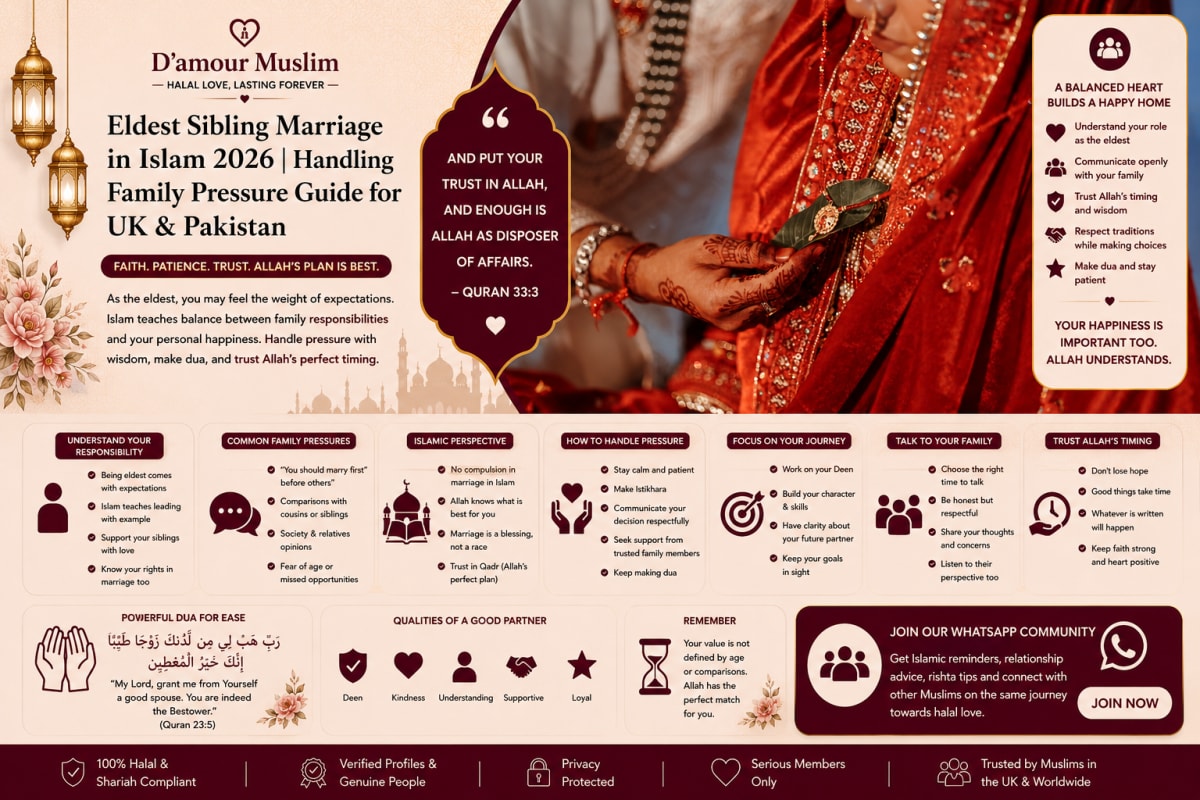
Eldest Sibling Marriage in Islam 2026: What are family pressure and expectations?
Asking many an old brother or sister, “When will you marry?” prompts many eldest sons and daughters to feel pressured in silence. In many South Asian families the custom of marrying the oldest child first is very much in force. But in Islam, eldest sibling marriage is not related to the age of the siblings; rather, it is based on fairness, readiness, and suitability. The foundation of a Muslim marriage in 2026 should be trust, a sense of responsibility, and comprehension. In Pakistan and in the UK, or in any other part of the world, when choosing to marry a girl or boy, whether it is under Islamic law or with a non-Muslim girl or boy, the choice must be made according to Islamic values.
Why should the eldest child marry first in Muslim families?
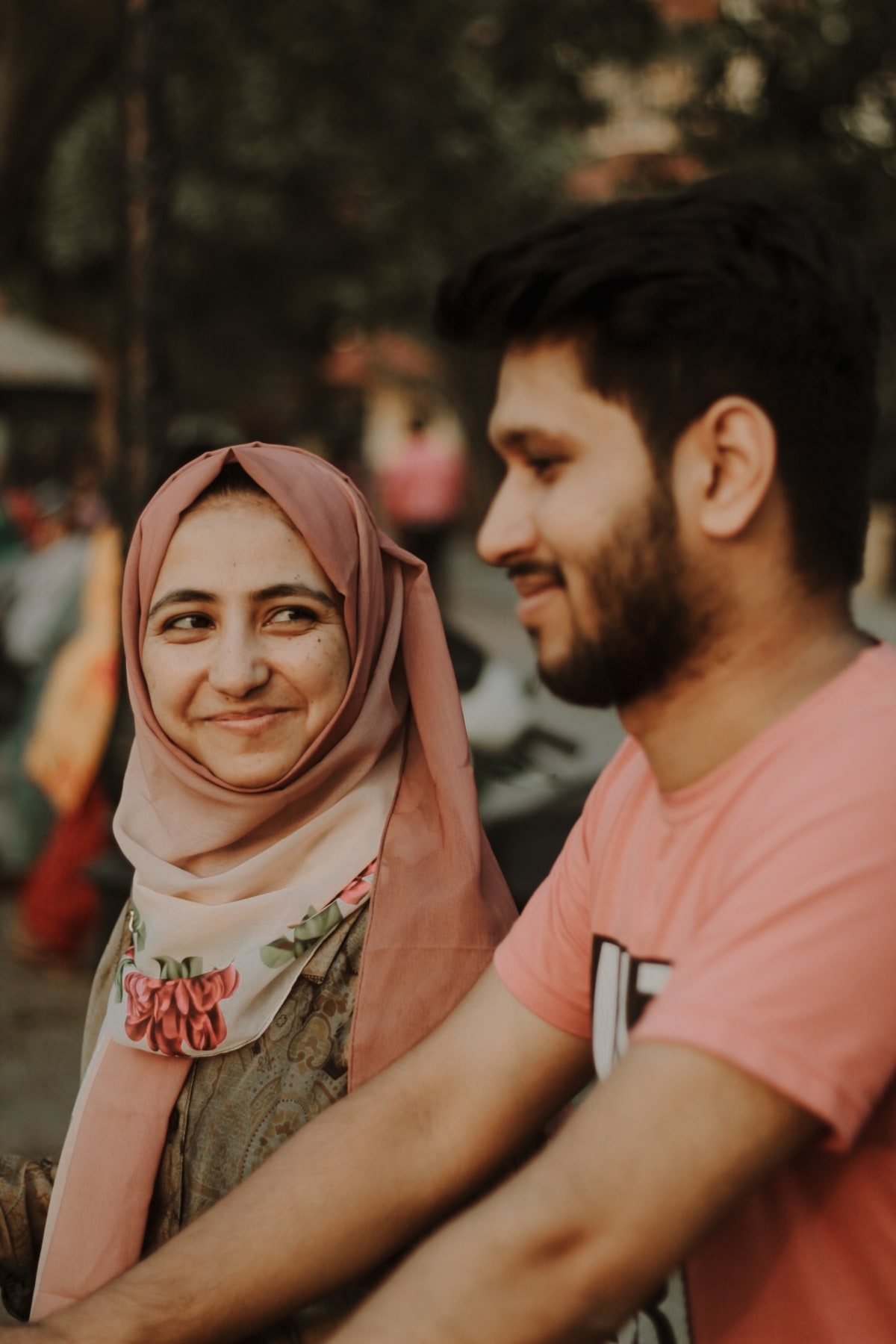
This is because of cultural norms, family commitments, and community customs, where many Muslim families believe that the eldest child has the first duty to marriage. In South Asian families the oldest child is seen as representing the family and is given more responsibilities. A practice that is common in Pakistan, India, and Bangladesh and among those living in London, Birmingham, Manchester, Bradford, Bristol, Nottingham, Sheffield, and Leicester. Parents feel that by marrying the eldest child first, there will be social issues and family order will be maintained. It is, however, based upon culture and not an obligation of Islam. Each family is unique, and the individual's marriage experience needs to be taken into account with wisdom and justice.
Is it required in Islam for the eldest sibling to marry first?
In Islam the marriage of the eldest sibling is not a necessity. Islam does not say that the eldest son or daughter must marry before the younger brothers and/or sisters. Consideration of the following factors is important when looking for your spouse: deen, character, compatibility, maturity, and sincere intentions. Time with justice and fairness is a duty for Muslims, as mentioned in the Quran. Allah says, "Yes, Allah has ordered you to return what is owed to others and to take part in settling differences among people to make just decisions." (Quran 4:58). The guidance also applies to family decisions. Parents are advised to take into account what is best for each child according to their abilities and not to adopt a rule not prescribed by Islam.
May younger siblings marry before older siblings?
Yes, in Islam younger siblings in 2026 can marry even before the older siblings do. It's not always necessary to wait for an unmarried brother or sister to be married; if they are married, they will be an appropriate match. The younger sibling is sometimes able to find a partner sooner, and the older sibling is sometimes not able to find a partner but is suitable. Islam doesn't encourage indecision; it encourages thinking. A compassionate explanation should be offered to the family about the situation. The aim of marriage for Muslims is to create a peaceful relationship and not to add to the stress on siblings.
The Emotional Challenges Faced by the Oldest Children
Often the oldest child has a big emotional burden in the marriage process. Both an eldest daughter and an eldest son may feel pressured because of the constant talk by the relatives about the marriage and the responsibility of the eldest son to uphold the expectations. This is a common stress, anxiety, or fear of child marriage pressure, which is from the oldest child. When someone is looking for a suitable Muslim husband or wife, queries from relatives regarding Muslim marriage proposals can be challenging. It is important for the parents/family members to remember that marriage is an important life choice. It's better to give emotional support and understanding than pressure.
How parents can balance Tradition and Islamic values
It is important for parents to help guide their children in a successful marriage in 2026; however, care must be taken that parents don't place pressure on children to join in with their marriage. Families should listen to children, understand their concerns, and consider the compatibility prior to accepting a marriage proposal. Family marriage expectations of the Muslim must always be considered in light of Islamic principles. A good wife or husband is not chosen because of her/his age. It is important to have good attributes such as being honest, religious, polite, and emotionally mature. The Holy Prophet (SAWS) translated the following: If a companion comes to you who has a religion and character that you like, then marry him. (Sunan al Tirmidhi 1084). We see here the value of character and of faith in deciding on marriage.
How siblings can help each other during marriage discussions
The support of siblings in 2026 can be a huge help in the rishta process, because they aren't comparing journeys. Marriage is a decision for an individual, but sometimes you may feel jealous or resentful in family relations. Older and younger siblings must communicate with respect, make dua for each other, and know that all have their own ways. Many Muslim families in the modern era, both in Canada, the USA, Australia, and the UAE and in the global Muslim community, are now learning to integrate cultural values with more flexible attitudes toward marriage.
What is more important than birth order in Muslim marriage?
Although family experiences in 2026 might be affected by birth order, it is no guarantee that a marriage will be successful. Islamic marriage compatibility is determined by more intangible characteristics like spiritual commitment, communication, emotional control, monetary knowledge, and common objectives. The younger sibling can find a successful marriage, and the eldest child can even find happiness when the right person enters their life. Muslim married families should try to ask whether or not two people can create a home of trust, respect, and peace. The majority of the above characteristics are more significant than the order of marriage in Muslim families.
Looking for serious Muslim dating outside the family’s influence
Today, many Muslims are able to locate a suitable partner through Muslim dating websites and services in 2026 without involving their families and holding onto Islamic principles. In cases where a family is confident about the halal rishta process, it is possible to have verified profiles, clear intentions, and serious Muslim matches. A great Muslim marriage site enables people to express their values, goals, and marriage expectations. This helps families to find the right partner that matches them not just in terms of culture but for compatibility as well.
Join Our Muslim Marriage Community on WhatsApp
When the Muslims have an enabling community, it makes it easier to find an appropriate spouse. Become a part of the biggest Muslim marriage community on WhatsApp and meet with serious marriage seekers from various communities.
Contact:
07831899605
+447831899605
Our special international WhatsApp groups include those for the Muslim community in London, Birmingham, Bristol, Bradford, Nottingham, Liverpool, Leeds, Manchester, the United Kingdom, Pakistan, and across the world. Members can find authentic Muslim members, daily serious relationships, and a welcoming community to find halal marriage connections.
Register for Your Free Profile on D’amour Muslim.
Visit: https://damourmuslim.com/
Register for free and make your Muslim marriage profile. Let your preferences, values, and expectations meet with the real Muslim singles and families. D’amour Muslim Marriage is a reputed Muslim marriage site and a flourishing Muslim marriage website for helping to discover serious Muslim marriages in the Muslim communities of the United Kingdom, Pakistan, India, Bangladesh, and other Muslim communities worldwide that are considered halal, or proper.
Frequently Asked Questions
Is it permissible in Islam for the eldest to marry first?
No, Islam doesn't prescribe the eldest son marry first and the younger sons after. Prepareness, character, compatibility, and faith are the basis of marriage.
Can the youngest sibling marry before the oldest sibling?
In fact, a younger brother or sister may be the first to get married. Islam doesn't discriminate according to the order of birth.
Why do Muslim families pressure eldest children about marriage?
There are many cultures that have a tradition that older children must get married first to their younger siblings. This is not a requirement of the Islamic laws but is due to family traditions and social norms.
What to say to kids about marriage?
Marriage should be discussed in a kind, patient, and understanding manner with the parents. They should lead children and respect their feelings and situation.
Is there any relationship between birth order and marriage compatibility?
Personality and family roles can be affected by birth order, but marriage success is not. Compatibility is more a matter of faith, communication, and shared values.
Before taking a rishta, what should families think about?
Denomination, character, compatibility, family values, and future goals are all factors to consider for a family. The order of the children in a marriage should not be a determining factor in deciding whether to accept or reject a marriage proposal.
Conclusion
Eldest sibling marriage in Islam is possible to be affected by culture, expectations, and traditions within a family, but birth order is not a requirement for marriage in Islam in 2026. While respecting parenthood and family values is vital, it is decisions around faith, character, compatibility, and readiness that are important. Each Muslim's path is unique, and Allah knows the best for each one of them. Families need to stick together, refrain from putting pressure on each other, and have patience, wisdom, and good intentions to discuss marriage.
Create a free profile on D’amour Muslim and become a part of the biggest WhatsApp Muslim marriage community. Find a true Muslim boyfriend or girlfriend and families looking for authentic halal marriage in the UK, Pakistan, and around the world. Start your marriage's journey with a trusted Muslim matrimonial platform that is based on faith, respect, compatibility, and sincere intentions.